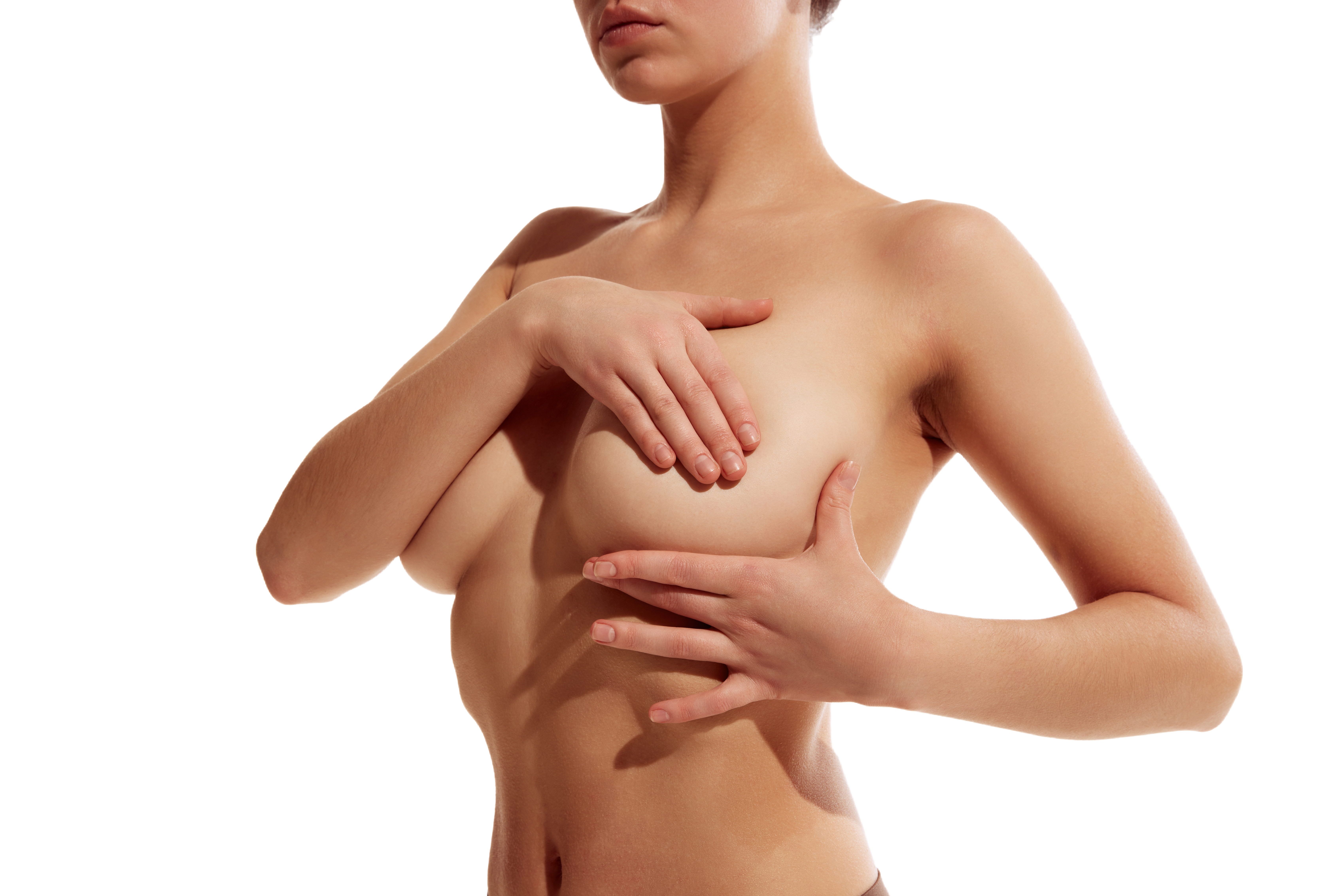
Mr Nakul Patel offers breast reduction in Leicester & Nottingham and across the East Midlands, taking an individualised approach that relieves physical discomfort and creates a natural, well-proportioned result.
Lighter, more proportionate breasts, without losing your natural shape
Breast reduction, also known as reduction mammoplasty, is a procedure designed to reduce the size and weight of the breasts. It involves removing excess breast tissue, fat and skin to achieve a more proportionate size and reshape the breast. The operation aims to relieve physical discomfort such as back and neck pain, improve breast symmetry, and enhance the ability to find well-fitting clothes.
The Procedure
What Is Breast Reduction?
The aim is to relieve discomfort and restore proportion, creating a result that feels lighter and looks naturally balanced.
Breast reduction is an operation to remove excess breast tissue, fat and skin, with the aim of achieving smaller, lighter and more proportionate breasts that suit your frame and lifestyle. The procedure can address breasts that are heavy enough to cause physical discomfort, skin irritation or restricted activity, as well as correcting asymmetry where one side is noticeably larger, helping many patients feel more comfortable and confident in their body.
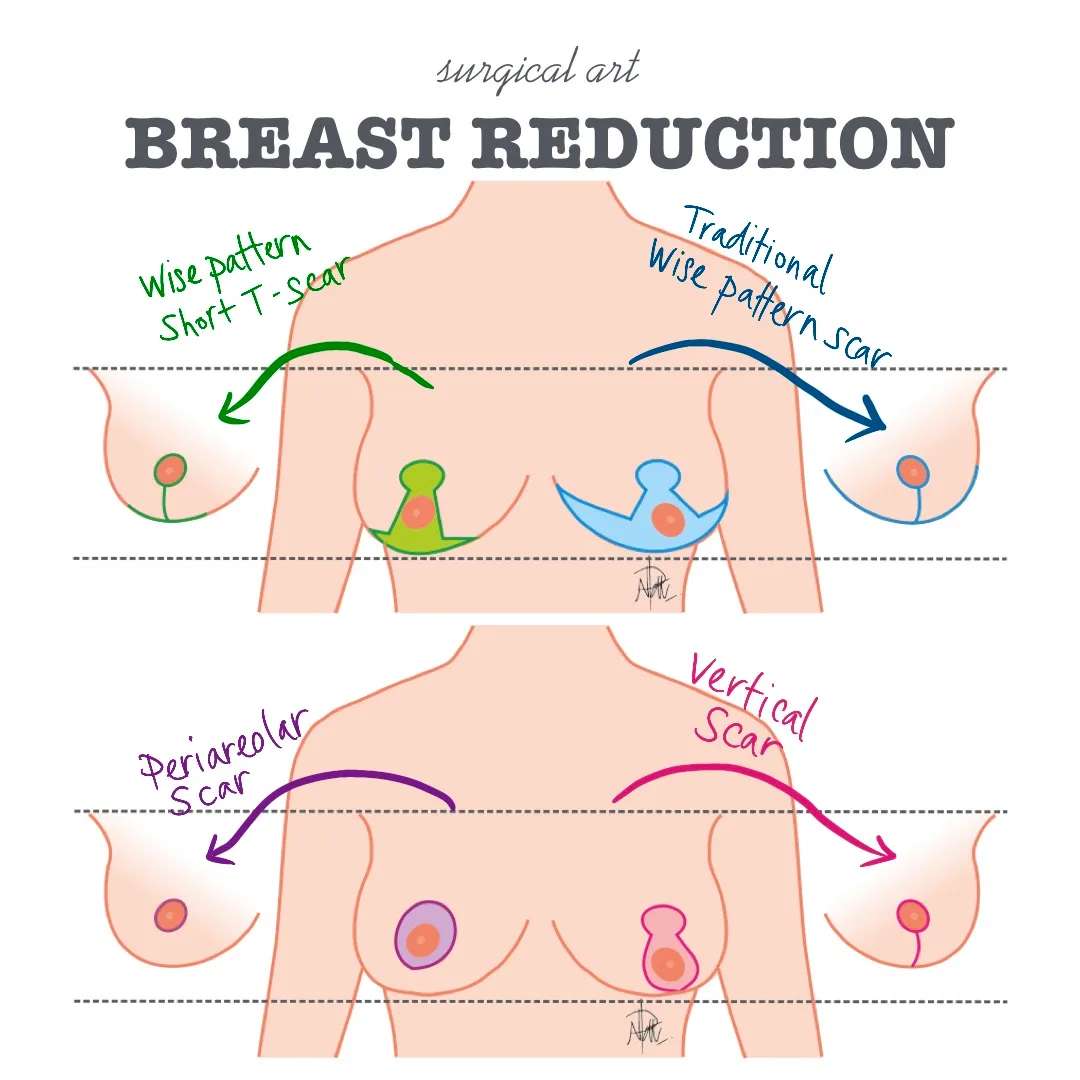
During surgery, excess glandular tissue, fat and skin are removed and the breast is reshaped, most commonly through an anchor-shaped incision around the areola, vertically down to the breast crease, and along the crease itself. The nipple and areola usually remain attached to their original blood and nerve supply and are repositioned higher on the newly shaped breast mound.
The extent of tissue removed, incision pattern and scar position vary from patient to patient, ranging from a vertical (lollipop) scar for moderate reductions to liposuction alone for patients with good skin elasticity. Mr Patel will guide you through these choices using measurements, photographs and diagrams to help you visualise a realistic, well-proportioned outcome.
★★★★★
“Massively increased my confidence.”
Patient · Leicester
Benefits
What Reduction Can Achieve
In appropriately selected patients, breast reduction offers a blend of physical, aesthetic and quality-of-life improvements.
Pain Relief
Alleviates chronic back, neck and shoulder pain caused by the weight of the breasts.
Improved Posture & Activity
Reduces physical restrictions, allowing for better posture and easier participation in sports.
Skin Relief
Helps resolve issues like grooving from bra straps and irritation in the fold beneath the breast.
Improved Proportion
Creates a more proportionate breast size that better balances with your frame.
Better Symmetry
Addresses differences in size or shape between the two breasts.
Expanded Clothing Choice
Widens clothing and bra options, making shopping easier when a larger bust limits standard sizes.
Psychological Well-being
Offers significant positive psychological benefits, including improved body image, confidence and self-esteem.
Mr Patel will discuss these potential benefits in the context of your breast size, symptoms and goals, helping you decide whether breast reduction is the right option for you.
Suitability
Is This the Right Procedure for You?
Careful patient selection is essential to maximise safety and satisfaction. Mr Patel will explore both surgical and non-surgical options with you so any decision to proceed is fully informed.
Have moderate or large breasts causing physical or emotional distress, such as back pain or shoulder grooves from bra straps
Have breasts that are primarily fatty with good skin elasticity, making you a good candidate for liposuction-only reduction
Are at a healthy weight (BMI under 30) and a non-smoker, as obesity or smoking increases complication risks
Have your general health optimised for safe surgery and recovery
Your BMI is significantly above the recommended range, as this increases the risk of complications and may need optimising first
You are currently smoking or using nicotine products and are not yet ready to stop
Medical conditions such as diabetes, cardiovascular disease or clotting disorders are not yet optimally controlled
Medical conditions such as diabetes, cardiovascular disease or clotting disorders are not yet optimally controlled
You are planning significant future weight loss or pregnancy, which can change breast size and shape after surgery
Weight loss through diet and exercise: breasts contain fat, so reducing overall body fat may decrease breast size.
Minimiser bras: create the illusion of smaller breasts while providing better support to reduce pain and discomfort.
Accepting your current size: surgery is a personal choice, and non-operative management is a valid option if symptoms are manageable.
Techniques
Types of Breast Reduction
There is no single technique that suits every patient. Mr Patel tailors the method to your breast size, tissue quality and goals.
Technique
Best For
Key Features
Scars
Typical Look
Standard (Anchor)
Significant reduction or considerable drooping
Three incisions allow maximum tissue removal and reshaping
Around areola, vertical to crease, and along the crease
Firm, well-lifted, proportionate shape
Vertical (Lollipop)
Moderate reductions
Two incisions; avoids the horizontal crease scar
Around areola and vertical to the crease
Naturally lifted, firmer lower pole
Liposuction-Only
Good skin elasticity, fat-predominant breasts
Removes fatty tissue only; no skin removal
Tiny liposuction access points
Softer reduction, natural contour
Therapeutic Mammoplasty
Breast cancer treatment combined with reshaping
Wide local excision performed alongside reduction
Similar to standard or vertical technique
Even, balanced shape between both breasts
← Swipe to compare →
Every technique is tailored during consultation using measurements, photographs and diagrams.
★★★★★
“I am extremely happy with the results; it would not be an exaggeration to describe the outcome as life-changing, particularly in terms of my confidence and day-to-day quality of life.”
Kavita
Your Journey
From First Consultation to Recovery
Sixteen steps, four phases, one continuous path: click any step to read Mr Patel's full guidance.
Phase 1 of 4
Consultation
1
Key Milestone
First Consultation
Your initial consultation focuses on understanding your goals and assessing your suitability for surgery. You are encouraged to ask questions and discuss expectations openly. Surgical markings may be drawn on the skin to explain treatment options, and clinical photographs will be taken. You will also review before-and-after examples and may bring reference photos to help clarify your preferences. Bringing a family member or friend along is recommended.
Patient Consultation
Cooling-Off Period
A two-week period built in after your first visit to reflect, discuss with family, and reach a considered decision rather than a rushed one.
Following your first consultation, a two-week cooling-off period is built into Mr Patel's practice to allow you time to reflect on the information given and to discuss matters with family or friends if you wish. This supports a considered decision rather than a rushed one, particularly for elective and long-lasting procedures.
Second Consultation
Confirming your decision and finalising the surgical plan, including technique, scar placement, recovery timeline and aftercare.
After your two-week cooling-off period, this follow-up appointment allows time to confirm your decision. Any remaining questions are addressed, your goals are reviewed, and the surgical plan is finalised, including technique, scar placement, recovery timeline and aftercare. Planning translates your aims into a personalised surgical plan tailored to your anatomy, including selecting the most appropriate technique, such as the anchor (inverted-T), vertical (lollipop) or liposuction-only approach, and confirming where the resulting scars will sit. Practical aspects, including the surgery date, whether you will stay overnight or be a day case, pre-operative testing, medication adjustments and lifestyle changes such as smoking cessation, are also confirmed. This consultation ensures you feel informed, confident and fully prepared to proceed.
Phase 2 of 4
Preparing for Surgery
Medicines & Supplements
Certain painkillers, blood thinners and supplements like fish oils can increase bruising or bleeding risk and are often paused 1-2 weeks before surgery.
Certain medicines, particularly blood thinners and some painkillers, can increase bruising or bleeding risk, so you may be advised to pause or adjust them before surgery under medical supervision.
Always provide a full list of prescribed, over-the-counter and topical medications so our team can give tailored, safe instructions.
Many natural supplements, such as fish oils, ginkgo or high-dose vitamin E, can interfere with clotting or anaesthesia and are often stopped 1-2 weeks before surgery.
Do not start any new supplements without checking, and follow written guidance on which products to avoid and when to restart them.
Diet & Lifestyle
A balanced diet, good hydration and regular light exercise support circulation and recovery in the weeks before surgery.
In the weeks before surgery, a balanced diet, good hydration and regular light exercise, such as walking, support circulation and recovery. Heavy alcohol intake, crash dieting and very intense new exercise routines are best avoided, as they can impair healing and increase complication risk.
Smoking & Nicotine
Stopping completely several weeks before and after surgery meaningfully lowers your risk of wound problems and infection.
Smoking and vaping nicotine reduce blood flow to the skin, slow healing and significantly increase wound and infection complications. You will usually be asked to stop completely several weeks before and after surgery; support for cessation can be arranged to help you maintain this.
BMI
A lower, stable BMI, ideally under 30, reduces the risk of wound problems, infection, blood clots and anaesthetic complications.
Body mass index (BMI) plays an important role in both the safety and results of your surgery. For most patients, the aim is to be close to a healthy weight, with a BMI ideally under 30 and stable for several months before surgery. A lower, stable BMI reduces the risk of wound problems, infection, blood clots and anaesthetic complications.
Phase 3 of 4
Hospital Journey
Admission
Checking in with the nursing team, meeting your anaesthetist, and final measurements and markings before you go to theatre.
On the day of surgery, your safety, dignity and comfort are the priorities. You will check in with the nursing team and meet your anaesthetist, who will review your medical history and explain the anaesthetic and pain-relief plan. Mr Patel will take measurements and draw precise markings on your skin to guide the procedure before you go to theatre.
Going to Theatre
You're escorted to theatre and given a general anaesthetic, so you'll be fully asleep and comfortable throughout.
When it is time for your operation, you will be escorted to the operating theatre. Breast reduction is carried out under general anaesthetic, usually taking between 90 minutes and 3 hours, so you will be asleep and comfortable throughout.
10
Key Milestone
The Operation
Once you are asleep, the operation proceeds in a carefully planned sequence tailored to your anatomy and the agreed technique. Typically, this includes:
Incision and marking: the surgeon makes incisions to remove excess weight and skin, most commonly the anchor (Wise) pattern, a circle around the areola, a vertical line down, and a horizontal line along the breast crease.
Excision and repositioning: excess glandular tissue, fat and skin are removed to reach the target size, and the nipple and areola, which usually remain attached to their original blood and nerve supply, are shifted upward to a more youthful, elevated position.
Reshaping and closure: the remaining tissue is sculpted and tightened for a firmer, more proportionate contour, and the incisions are closed with layered, internal dissolvable sutures.
Applying a surgical bra to manage swelling and support the breasts before you leave theatre.
Operating Theatre
Recovery & Discharge
Closely monitored while you wake, then home the same day or occasionally after one night with clear aftercare instructions.
After surgery, dressings and a support bra or bandages are applied and you will wake in the recovery area, where your breathing, pain and comfort are closely monitored before you return to the ward. Your breasts will feel firm and swollen, and there may be bruising across the chest. Most patients go home the same day, occasionally staying one night. Before discharge, you will receive written aftercare instructions, advice about your garments and dressings, medication, and clear contact details for any urgent concerns.
Phase 4 of 4
Recovery After Breast Reduction
Recovery is gradual and varies depending on the technique used, extent of tissue removed and your general health. Mr Patel will guide you through each stage with a personalised aftercare plan.
12
Key Milestone
Week 1: Early Recovery
Expect swelling, bruising, tightness and discomfort across the chest, particularly when moving your arms.
An early follow-up appointment allows your wounds to be checked and stitches removed if necessary.
Guidance is provided on pain management and the use of compression garments.
Gentle walking from the first day or two helps reduce the risk of blood clots.
Weeks 2-4: Regaining Comfort
Most patients return to light or desk-based work within 1-4 weeks as swelling and discomfort continue to settle.
Pain and bruising begin to settle, although some tenderness and firmness of the breasts is common.
Most patients take 1-4 weeks off work, depending on how physical their role is.
Continue wearing your support garment as advised, and avoid heavy lifting.
You can usually return to driving once you are able to move your arms comfortably and tolerate the pressure of a seatbelt, typically 1-2 weeks.
3-6 Weeks: Returning to Exercise
Light walking continues throughout, with the gym and upper-body exercise reintroduced gradually from around 3-6 weeks.
Most patients can resume normal day-to-day activities, with gradual reintroduction of exercise.
Light walking starts immediately, with upper-body exercise and the gym generally avoided until around 3-6 weeks.
Contact sports are best avoided until around 3 months, following Mr Patel's guidance.
3-6 Months: Settling Phase
Swelling continues to soften as the breasts settle into their new shape and scars begin to fade and flatten.
A support bra is usually worn for up to 8 weeks to help the breasts settle into their new shape, alongside further follow-up appointments to monitor healing and guide scar care.
Swelling continues to improve over 3-6 months, and the breast shape becomes softer and more natural.
Scars may remain pink or slightly raised at this stage but will gradually fade and flatten over time.
16
Key Milestone
12-18 Months: Final Outcome
The final breast shape and size stabilise, although natural ageing, weight changes and pregnancy can still influence future appearance.
Results are long-lasting if your weight remains stable, although pregnancy, weight change or ageing may alter shape over time.
Scars usually reach their more mature, flattened appearance between 12 and 18 months, although they remain permanent.
Patient Testimonial
★★★★★
“His positivity and confidence allowed me to fully trust his judgement… helped me to truly establish my self-esteem and become sure in myself.”
Molly M.
Scar Care
Mr Patel's Approach to Scar Optimisation
Strong emphasis is placed on scar quality from the outset, from the operating table through to the final months of healing.
During Surgery
Wounds are carefully closed in layers using fine suturing techniques, planned to keep the anchor or vertical scar as discreet as possible from the outset.
→
Early Healing
Dressings and compression garments are selected for your skin type and healing, with extra attention paid to the T-junction where incisions meet, a common site for delayed healing.
→
Longer-Term Care
A routine of gentle moisturising, massage and silicone gel or tape, together with consistent sun protection, helps scars fade to a fine line over 12-18 months.
Informed Consent
Risks & Complications
Breast reduction is well-established and generally safe in appropriately selected patients. As with all surgery, there are risks Mr Patel will discuss with you in detail: expand each section below to read more.
Pain, bruising & swelling: normal in the first 1-2 weeks
Tightness & firmness of the chest, which gradually settles
Sensory changes: numbness or change in nipple sensation is common but often settles over weeks to months
Wound issues: delayed healing and superficial infection are common, particularly at the T-junction of incisions
Scarring: scars are permanent and can sometimes remain thick, red or raised (hypertrophic scarring)
Fat necrosis: development of hard lumps caused by damaged fat tissue
Fluid collection: seroma or haematoma can collect under the wound and may require draining
Asymmetry: breasts may remain slightly different in size or shape
Nipple necrosis: partial or total loss of the nipple and areola due to damaged blood supply
Blood clots: DVT or PE can occur, which are potentially life-threatening
Deep infection: may require intravenous antibiotics or further surgery
Anaesthetic complications
Nipple Sensation & Breastfeeding
In most cases, the nipple and areola remain attached to their original blood and nerve supply (a pedicle), which helps preserve sensation and the potential to breastfeed in the future. In a small number of patients with very large or significantly drooping breasts, a free nipple graft may be needed instead, which can affect sensation and breastfeeding ability; this will be discussed with you individually during planning.
Mr Patel takes a careful, personalised approach to risk reduction, including thorough pre-operative assessment, meticulous surgical technique, appropriate measures to reduce blood-clot risk, and close postoperative follow-up.
Breast reduction (reduction mammoplasty) removes excess breast tissue, fat and skin to create smaller, lighter breasts that are more proportionate to your body.
Ideal candidates have large breasts causing back, neck or shoulder pain, skin irritation, or emotional distress, and are in good health with realistic expectations.
The procedure typically lasts 2-4 hours under general anaesthetic, depending on the amount of tissue removed and technique used.
Most patients take 1-2 weeks off work, wear a support bra for up to 8 weeks, and avoid heavy lifting or the gym for 3-6 weeks; full recovery takes 3-6 months.
Scars are usually around the areola, vertical from nipple to breast crease, and horizontal in the crease (lollipop or anchor shape); they fade over time.
Risks include pain, swelling, poor scarring, infection, changes in nipple sensation, asymmetry and, rarely, nipple loss or the need for revision.
Yes, liposuction-assisted reduction suits fatty breasts with good skin elasticity, offering smaller scars and quicker recovery.
Many women experience significant relief from chronic back, neck and shoulder pain after reducing breast weight and improving posture.
Light walking starts immediately, upper-body exercise after around 6 weeks, and contact sports after around 3 months, following your surgeon's guidance.
If medically necessary, for example due to pain or rashes, it may qualify; documentation of symptoms and photos is typically required for approval.
Stop smoking, adjust medications and supplements, maintain a stable weight, and arrange post-op support; full instructions are given at consultation.
Results are long-lasting if your weight is stable; pregnancy, weight gain or ageing may alter shape over time.
Take the First Step
Ready to Begin
Your Journey...
Book a private consultation with Mr Nakul Patel to discuss your goals and
explore your options in a warm, confidential setting.